


34 minutes ago
In 2025, after years of speculation that began with a 2019 tease, Team Cherry finally released Hollow Knight: Silksong across several major platforms. By 2026, the conversation around the sequel has shifted from launch-day surprise to the more practical question of how it differs from the 2017 original. Hornet now leads the adventure in place of The Knight, but the changes run much deeper than a new protagonist. Some systems are more forgiving, some are more restrictive, and a few are simply more modern. Here is a newsroom-style breakdown of the biggest shifts, for better and worse.
A Different Rhythm of Healing ❤️
Health remains central to both games, but the two Metroidvanias handle recovery differently. The Knight in Hollow Knight relies on Soul, a magical energy that charges after players strike enemies. Hornet in Hollow Knight: Silksong uses Silk, which fills in the same basic way. The sequel is a little more limiting because statues and Hot Springs can recharge The Knight’s Soul in the original, while Silksong offers fewer obvious refill points. Special abilities and healing both consume charges from the Soul or Silk meter.
The healing rhythm has changed too. In Hollow Knight, players can heal one health meter at a time, and one full Soul charge can grant three health nodes. Hornet’s Silk also heals three life nodes, but Silksong makes players heal all three at once. Her healing animation is slightly faster, and it can be activated in the air without aid. That gives Silksong a small but noticeable edge in moment-to-moment combat, even if its resource economy is tighter.
Death, Currency, and a Kinder Recovery Loop ?
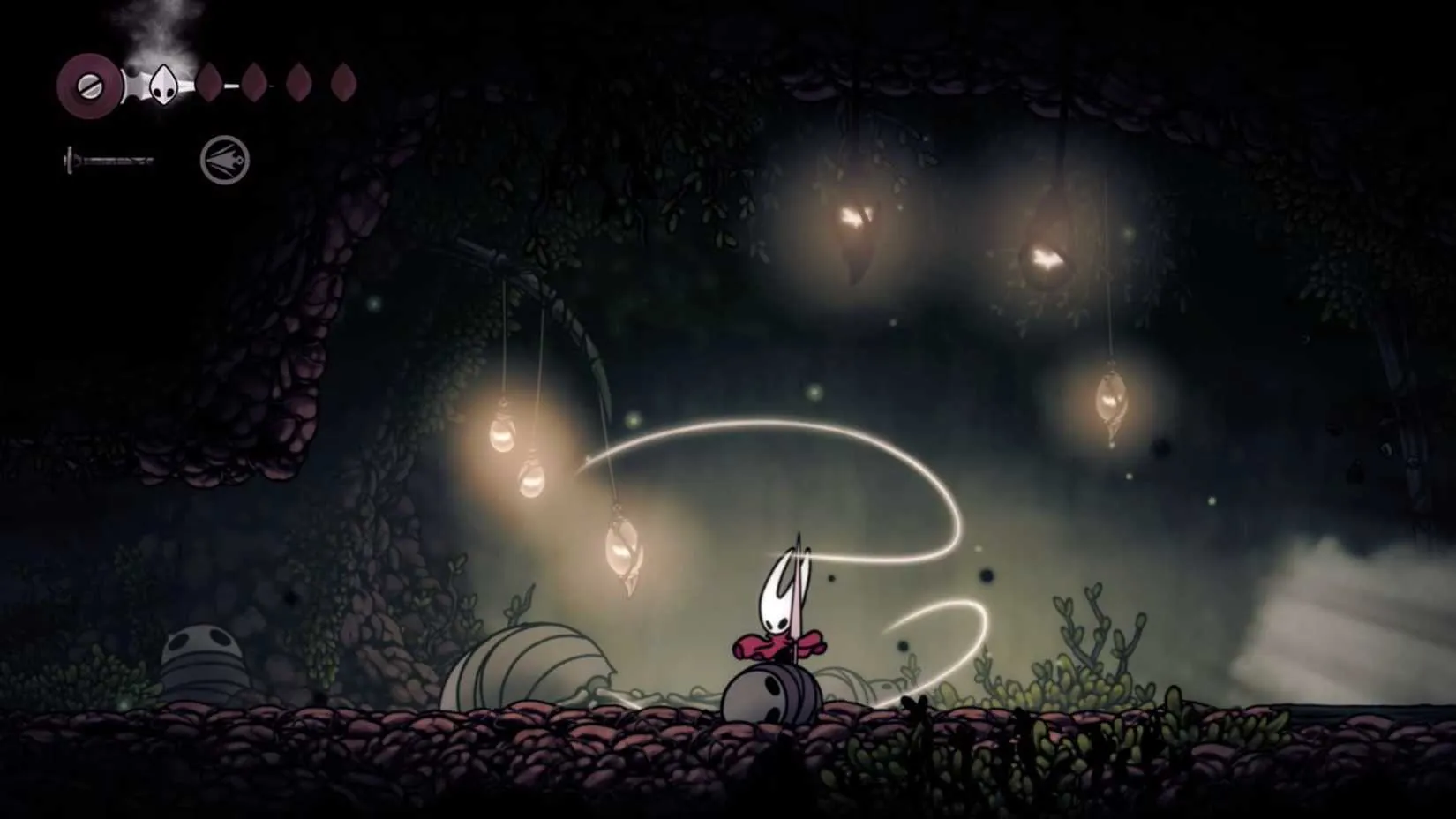
Both games borrow heavily from the Soulslike genre, especially when death is involved. In Hollow Knight, players leave behind Geo, the game’s main currency, when they die. Returning to the corpse’s location reveals an animated shade that can fight back. Until that copy is destroyed, The Knight’s Soul meter is cracked and weakened. The system is tense, punishing, and memorable.
Silksong is more generous to players who keep dying, which will happen often because it is one of the hardest Metroidvanias in recent years. Hornet leaves behind a binding of stationary Silk, and once it is found, players regain their lost Rosaries. Shell Shards, the game’s other currency, are never dropped. Hornet’s Silk meter is also never damaged in the process. Resetting at benches can still be taxing, but at least Hornet does not have to fight herself. It is a softer recovery loop without removing the sting of failure.
Tools Expand Hornet’s Combat Options ⚔️
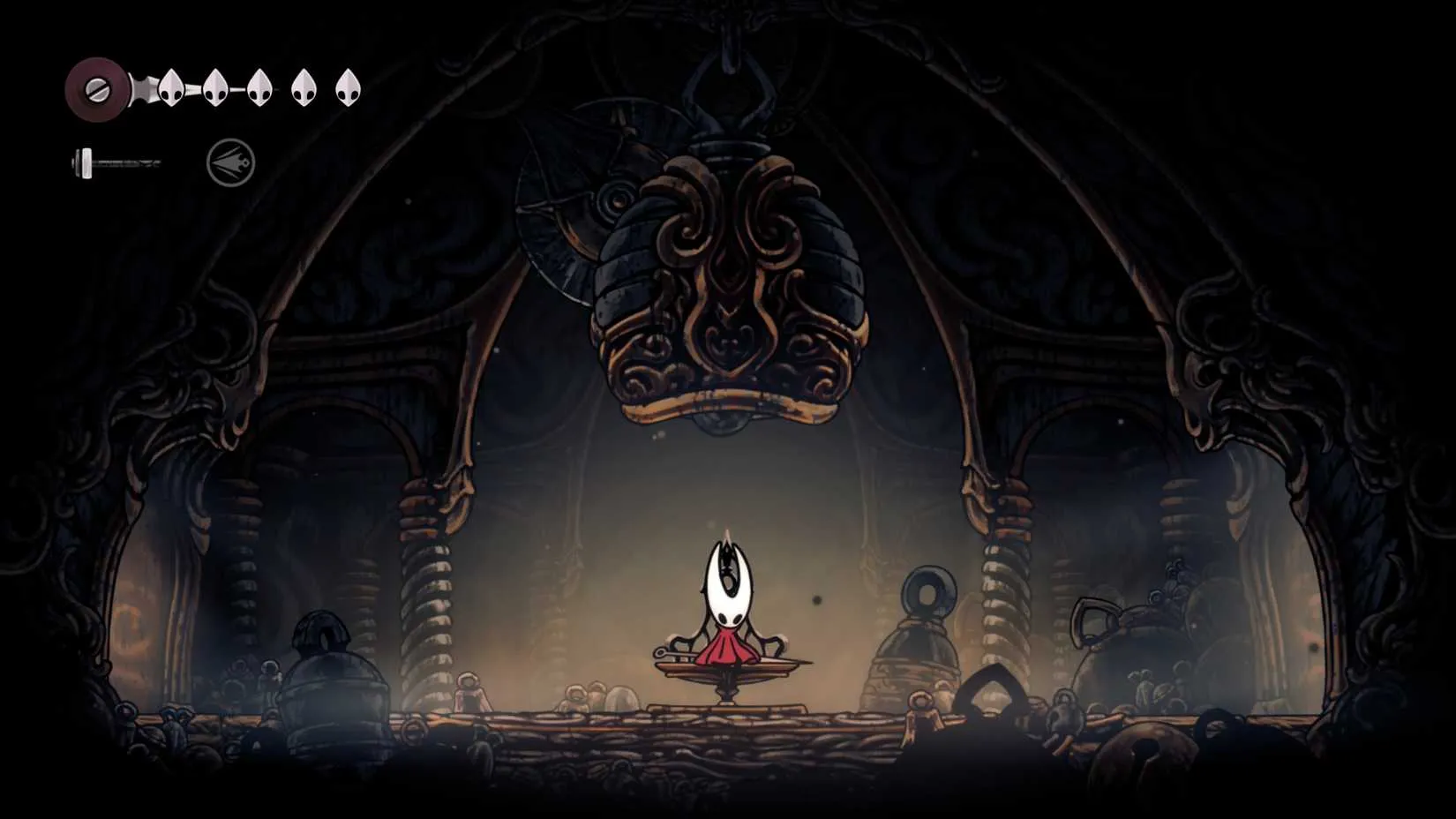
Players gain power for The Knight as they progress through Hollow Knight, from an energy blast to a downward strike that can shake the earth. These attacks use Soul energy, and aside from The Knight’s Nail, they are his only attack types. Silksong adds a new combat gimmick through Tools. Hornet can obtain Tools from vendors, by completing quests, or by finding them in the world.
A useful early example is the Sting Shard. When tossed out, it triggers an explosion of blades if enemies touch it. Tools will not hurt as much as Hornet’s Needle, but they add tactical texture to fights. They give players more ways to control space, punish aggressive enemies, and experiment with loadouts. The system does not replace the core Needle combat. It complements it.
A Protagonist With a Voice ?
The Knight did not even get a proper name in Hollow Knight, let alone a voice. Like many game protagonists, the hero was silent, and NPCs simply talked to him rather than with him. Hollow Knight: Silksong makes Hornet a more engaging lead because she can talk. She has real conversations with NPCs, and the dialogue can be both informative and entertaining.
Silksong does not have voiced dialogue, so that element has not changed. Even so, having a non-silent protagonist in a game sequel is a step up. Hornet feels more present in the world, and her exchanges with other characters give the story more personality. Team Cherry could add voiced dialogue in a future game, perhaps a decade from now, but for this sequel the written conversations already do meaningful work.
Maps and Quests Become More Accessible ?️
Unlike most Metroidvanias, which naturally map the game as players progress, Hollow Knight introduced a different system. Before players could know where they were, they needed to find a mapmaker named Cornifer in every biome they visited. He sold only maps, while his wife, Iselda, sold other accessories such as icons. It was an intuitive system once players adjusted to it, but it was not automatic.
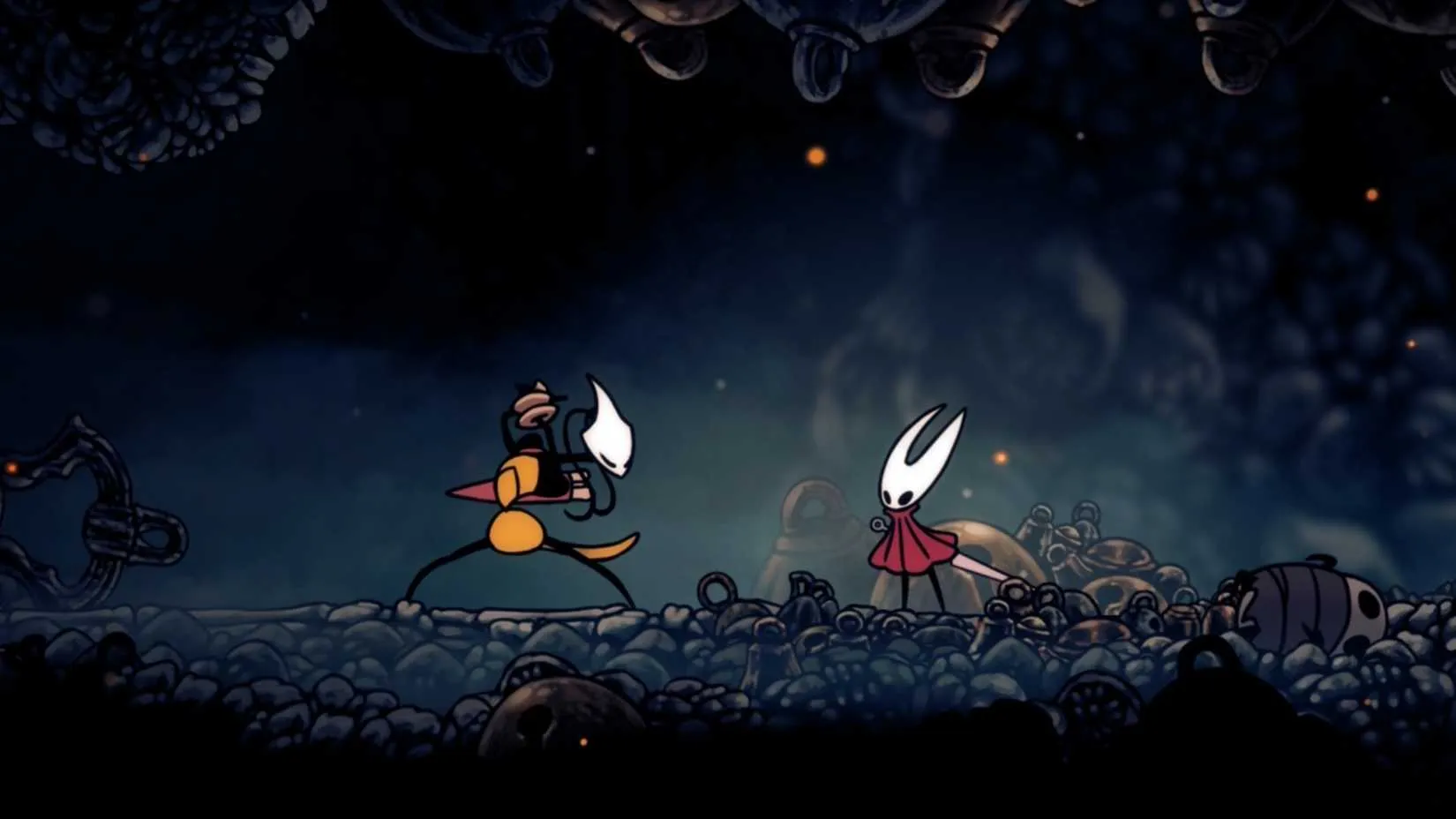
Hollow Knight: Silksong improves the map system, and the change coincides with Hornet’s ability to talk. A new mapmaker named Shakra appears in biomes to sell maps and accessories directly to Hornet without the help of another character. She is also a more active figure in the story, and the bond between her and Hornet deepens as the game progresses. Cornifer and Iselda were memorable characters in the original, but Shakra is a good change for the sequel.
Quests have changed as well. Hollow Knight had quests, but they were not marked in menus the way most games handle them. Silksong makes quests more apparent through the Wish system. After talking to NPCs or visiting a bulletin board, Hornet can tackle several Wishes, which are tracked in a separate menu for easy navigation. Some quest details remain vague, and they will not guide players to exact locations. Even so, it is a big shift from the original. Some veterans may prefer the obtuse nature of Hollow Knight’s quest design, the same way some RPG fans prefer to turn quest markers off. New players will almost certainly appreciate the Wish system.
System
Hollow Knight
Hollow Knight: Silksong
Healing resource
Soul
Silk
Healing style
One mask at a time
Three masks at once
Death drop
Geo and a hostile shade
Rosaries and stationary Silk
Offense
Nail and Soul abilities
Needle and Tools
Protagonist voice
Silent
Speaks in dialogue
Mapping
Cornifer and Iselda
Shakra
Quests
Largely unmarked
Wish menu
The Verdict
Taken together, these changes show Team Cherry rethinking not just who the hero is but how the sequel communicates with players. Healing is faster but less flexible. Death is less punishing. Tools add tactical depth. Dialogue and Wish tracking reduce friction, while Shakra streamlines mapping. In 2026, Silksong stands as a sequel that is both harsher in combat and kinder in recovery. It preserves the original’s opaque charm while sanding down a few edges. For veterans, the debate over whether every change is an improvement will continue. For newcomers, the sequel is easier to read, even when its world remains deliberately mysterious.
For players weighing whether to revisit Hallownest or dive into Pharloom for the first time, both games are widely available on PC. If you’d rather not pay full price while deciding which style suits you, keeping an eye on PC game discounts from a tracker like DealNest can make the choice easier. The site gathers current offers across storefronts, so you can compare prices without hopping between tabs.
A Different Rhythm of Healing ❤️
Health remains central to both games, but the two Metroidvanias handle recovery differently. The Knight in Hollow Knight relies on Soul, a magical energy that charges after players strike enemies. Hornet in Hollow Knight: Silksong uses Silk, which fills in the same basic way. The sequel is a little more limiting because statues and Hot Springs can recharge The Knight’s Soul in the original, while Silksong offers fewer obvious refill points. Special abilities and healing both consume charges from the Soul or Silk meter.
The healing rhythm has changed too. In Hollow Knight, players can heal one health meter at a time, and one full Soul charge can grant three health nodes. Hornet’s Silk also heals three life nodes, but Silksong makes players heal all three at once. Her healing animation is slightly faster, and it can be activated in the air without aid. That gives Silksong a small but noticeable edge in moment-to-moment combat, even if its resource economy is tighter.
Death, Currency, and a Kinder Recovery Loop ?
Both games borrow heavily from the Soulslike genre, especially when death is involved. In Hollow Knight, players leave behind Geo, the game’s main currency, when they die. Returning to the corpse’s location reveals an animated shade that can fight back. Until that copy is destroyed, The Knight’s Soul meter is cracked and weakened. The system is tense, punishing, and memorable.
Silksong is more generous to players who keep dying, which will happen often because it is one of the hardest Metroidvanias in recent years. Hornet leaves behind a binding of stationary Silk, and once it is found, players regain their lost Rosaries. Shell Shards, the game’s other currency, are never dropped. Hornet’s Silk meter is also never damaged in the process. Resetting at benches can still be taxing, but at least Hornet does not have to fight herself. It is a softer recovery loop without removing the sting of failure.
Tools Expand Hornet’s Combat Options ⚔️
Players gain power for The Knight as they progress through Hollow Knight, from an energy blast to a downward strike that can shake the earth. These attacks use Soul energy, and aside from The Knight’s Nail, they are his only attack types. Silksong adds a new combat gimmick through Tools. Hornet can obtain Tools from vendors, by completing quests, or by finding them in the world.
A useful early example is the Sting Shard. When tossed out, it triggers an explosion of blades if enemies touch it. Tools will not hurt as much as Hornet’s Needle, but they add tactical texture to fights. They give players more ways to control space, punish aggressive enemies, and experiment with loadouts. The system does not replace the core Needle combat. It complements it.
A Protagonist With a Voice ?
The Knight did not even get a proper name in Hollow Knight, let alone a voice. Like many game protagonists, the hero was silent, and NPCs simply talked to him rather than with him. Hollow Knight: Silksong makes Hornet a more engaging lead because she can talk. She has real conversations with NPCs, and the dialogue can be both informative and entertaining.
Silksong does not have voiced dialogue, so that element has not changed. Even so, having a non-silent protagonist in a game sequel is a step up. Hornet feels more present in the world, and her exchanges with other characters give the story more personality. Team Cherry could add voiced dialogue in a future game, perhaps a decade from now, but for this sequel the written conversations already do meaningful work.
Maps and Quests Become More Accessible ?️
Unlike most Metroidvanias, which naturally map the game as players progress, Hollow Knight introduced a different system. Before players could know where they were, they needed to find a mapmaker named Cornifer in every biome they visited. He sold only maps, while his wife, Iselda, sold other accessories such as icons. It was an intuitive system once players adjusted to it, but it was not automatic.
Hollow Knight: Silksong improves the map system, and the change coincides with Hornet’s ability to talk. A new mapmaker named Shakra appears in biomes to sell maps and accessories directly to Hornet without the help of another character. She is also a more active figure in the story, and the bond between her and Hornet deepens as the game progresses. Cornifer and Iselda were memorable characters in the original, but Shakra is a good change for the sequel.
Quests have changed as well. Hollow Knight had quests, but they were not marked in menus the way most games handle them. Silksong makes quests more apparent through the Wish system. After talking to NPCs or visiting a bulletin board, Hornet can tackle several Wishes, which are tracked in a separate menu for easy navigation. Some quest details remain vague, and they will not guide players to exact locations. Even so, it is a big shift from the original. Some veterans may prefer the obtuse nature of Hollow Knight’s quest design, the same way some RPG fans prefer to turn quest markers off. New players will almost certainly appreciate the Wish system.
System
Hollow Knight
Hollow Knight: Silksong
Healing resource
Soul
Silk
Healing style
One mask at a time
Three masks at once
Death drop
Geo and a hostile shade
Rosaries and stationary Silk
Offense
Nail and Soul abilities
Needle and Tools
Protagonist voice
Silent
Speaks in dialogue
Mapping
Cornifer and Iselda
Shakra
Quests
Largely unmarked
Wish menu
The Verdict
Taken together, these changes show Team Cherry rethinking not just who the hero is but how the sequel communicates with players. Healing is faster but less flexible. Death is less punishing. Tools add tactical depth. Dialogue and Wish tracking reduce friction, while Shakra streamlines mapping. In 2026, Silksong stands as a sequel that is both harsher in combat and kinder in recovery. It preserves the original’s opaque charm while sanding down a few edges. For veterans, the debate over whether every change is an improvement will continue. For newcomers, the sequel is easier to read, even when its world remains deliberately mysterious.
For players weighing whether to revisit Hallownest or dive into Pharloom for the first time, both games are widely available on PC. If you’d rather not pay full price while deciding which style suits you, keeping an eye on PC game discounts from a tracker like DealNest can make the choice easier. The site gathers current offers across storefronts, so you can compare prices without hopping between tabs.